W-beam guardrails are long and heavy cargo. The rationality of container loading directly determines three core indicators: logistics cost, cargo intactness rate and customer satisfaction. Improper loading will either result in low space utilization, pushing up unit freight charges and weakening quotation competitiveness; or inadequate cargo securing, which leads to deformation, collision damage and scattered goods during transit, triggering customer complaints, product returns and even additional compensation costs.
As an original manufacturer specializing in guardrail exports, we boast years of practical experience in overseas container loading and are fully familiar with the loading characteristics of common container types including 20GP and 40HQ. Combined with the structural features of guardrail products, we have developed a set of implementable container loading optimization solutions. These solutions maximize container space utilization to cut transportation costs while guaranteeing intact cargo delivery to destinations. Detailed guidelines are provided below for sales teams to communicate with clients and on-site factory loading crews.
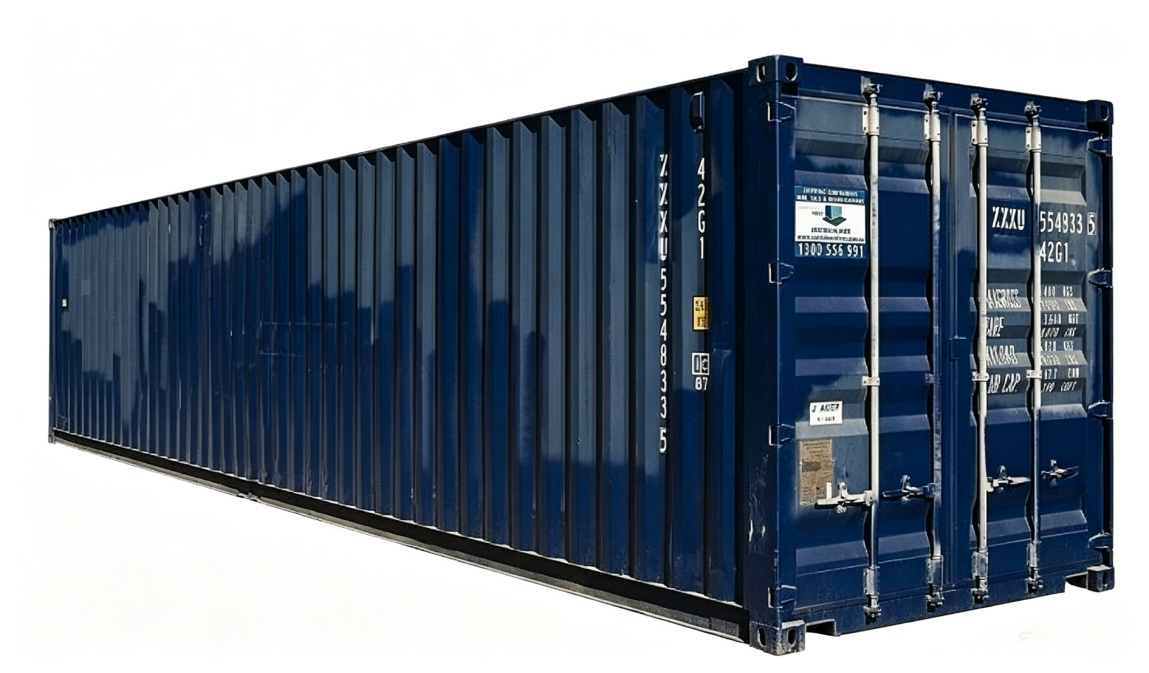
I. Parameters & Loading Capacity Reference of Common Container Types
20GP general-purpose containers and 40HQ high-cube containers are the most widely used for guardrail exports. The two types differ drastically in internal dimensions, weight limits and loading capacity. Appropriate container selection shall be made based on order volume and product categories (guardrail panels, posts, fittings).
1. 20GP General-Purpose Container
Dimensions: L 5.899m × W 2.352m × H 2.386m, effective volume approx. 33.1 CBM
Weight limit: 17.5–22 tons (varies by shipping line and carrier; certain routes allow up to 28 tons, confirmation in advance is required)
(1)Applicable scenarios: Small-batch orders, trial orders, sample shipments and urgent replenishment orders
(2)Advantages: Flexible loading & unloading, faster ocean transit and lower port charges, which reduce clients’ trial order costs for small-volume purchases.
2. 40HQ High-Cube Container
Dimensions: L 12.02m × W 2.35m × H 2.386m, effective volume approx. 67.5 CBM
Weight limit: 26–28 tons (some routes permit a maximum payload of 30 tons)
(1)Applicable scenarios: Large-volume engineering orders; the primary container type for guardrail exports, which significantly dilutes unit transportation costs.
(2)Precautions: 40HQ containers feature larger volume and heavier total payload. Uniform weight distribution must be maintained during loading to avoid container tilting caused by local overloading. Rigorous cargo securing is mandatory to prevent compression damage in transit.
II. Container Layout Optimization: Techniques to Maximize Space Utilization
The core principle of container loading lies in space complem entarity and balanced weight distribution. Rational layout tailored to the distinct structures of guardrail panels, posts and fittings eliminates wasted space. Practical techniques are outlined as follows:
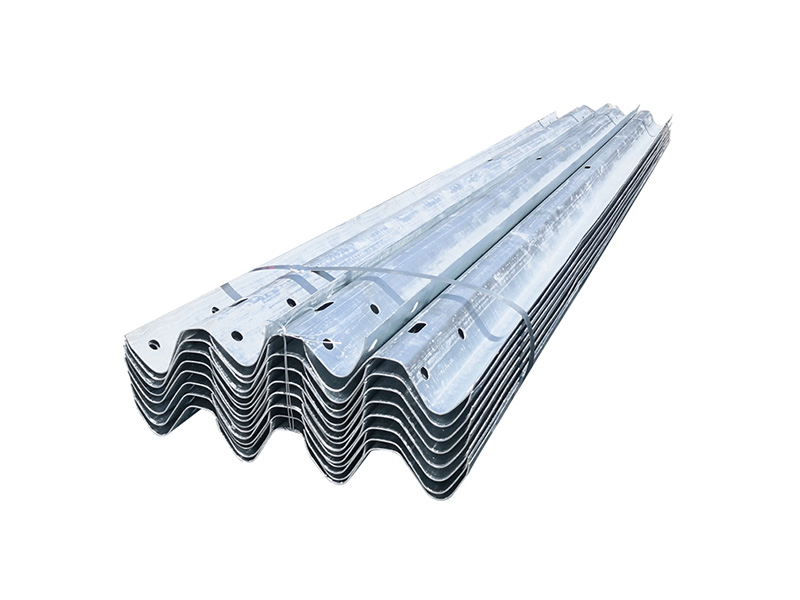
1.W-Beam Guardrail Panel Placement:As elongated components, guardrail panels shall be laid flat on the container floor parallel to the container length. Bundle 10–15 panels per pack and fasten tightly with steel strapping for neat stacking. Double-wave W-beam panels may be layered with a maximum stacking height of 1.5–2.0m to avoid unstable center of gravity. For thicker, heavier three-wave Thrie-beam panels, limit stacking height to 1.2–1.5m to prevent crushing deformation.
2.Guardrail Post Placement:Round or square posts shall be inserted into gaps between stacked guardrail panels or arranged along both container sidewalls to utilize residual vacant space. Posts must stand upright; bundle 50–100 posts per pack secured with steel straps. Wooden pallets shall be placed underneath to separate posts from the container floor and avoid rusting or deformation during shipping.
3.Fitting Placement:Small accessories including bolts, post caps, offset blocks and brackets shall be packed uniformly into cartons or woven bags with clear marking. Store packaged fittings in overhead gaps above guardrail panels/posts or container corners to avoid occupying primary cargo space. All fitting packages must be fully sealed and moisture-proof to prevent dampness and loss during ocean transit.
4.Weight Distribution Control:Heavier items (4.0mm thick guardrail panels, heavy-gauge posts) shall be loaded at the bottom of the container, while lightweight goods (fittings, 2.5mm thin guardrail panels) are stacked on top to avoid gravity shift and transport hazards. The weight gap between the left and right sides of the container shall not exceed 5 tons to maintain lateral balance.
III. Packaging & Securing: Core Measures to Prevent Deformation & Collision Scratches
Guardrails undergo surface treatments such as hot-dip galvanizing and powder coating, resulting in smooth finished surfaces. Substandard packaging and securing will lead to scratches, deformation and peeling zinc coating during transit, compromising product quality and client acceptance. Therefore, standardized packaging and cargo securing are critical loading procedures.
1. Packaging Specifications
(1)Guardrail Panels: Fasten each bundle with 2–3 steel straps for rigidity. Wrap entire packs with moisture-proof film to resist marine vapor corrosion. Install rubber or foam edge protectors on all panel corners to eliminate collision scratches.
(2)Guardrail Posts: Secure each post bundle with steel strapping and rest on wooden pallets, fully wrapped in moisture-proof film. Custom wooden pallet packaging is available upon client request for enhanced protection.
(3)Fittings: Pack into waterproof cartons with labeled product name and quantity for full sealing against dampness and loss. Bulk fittings may be palletized for easier loading and unloading.
2. Cargo Securing Standards
(1)Guardrail Panels: Insert wooden battens between adjacent packs to eliminate friction and collision. Fasten wood or steel pressure beams atop stacked panels and anchor them to the container ceiling to stop shifting and shaking en route.
(2)Guardrail Posts: For upright storage, wedge wooden blocks at the base and fasten the top with ropes or steel straps to the container roof to prevent toppling. Horizontally laid posts shall be clamped with timber bracing to avoid rolling.
(3)Overall Container Reinforcement: Install heavy-duty timber and steel bracing at the container door to block cargo from sliding out during transport. Fill all internal voids with foam padding or wooden blocks to minimize cargo movement.
IV. Post-Loading Inspection & Follow-Up Procedures: Boost Client Confidence
Complete inspection and documentation after container loading not only guarantee cargo integrity, but also facilitate client customs clearance and on-site inspection, greatly elevating trust levels. Three key steps shall be implemented strictly:
1.Full Loading Photo Documentation: Capture comprehensive photos covering the container doorway, overall internal layout, packaged goods and all securing measures. Mark the quantity of each bundle for client cross-verification. Take clear photos of the container seal number to prove cargo integrity without tampering during transit.
2.Packing List Cross-Checking: Fill out detailed packing lists stating container number, seal number, product description, specifications, quantity, gross weight and volume. Ensure full consistency between documents and actual loaded goods to simplify customs clearance and stock counting for clients.
3.Cargo Damage Prevention Reminders: Advise clients to conduct immediate unpacking inspection upon cargo arrival. In case of deformed or scratched goods, request timely photographic evidence submission. Our team will deliver prompt solutions to fully safeguard clients’ legitimate interests.
Container loading optimization is far more than merely filling the container. It strikes the optimal balance among space utilization, weight control and logistics cost under the prerequisite of safe transit. Our factory deploys a professional loading team proficient in loading techniques for all container types. Every export shipment is loaded in strict compliance with the above optimization plan to ensure safe and punctual delivery. Meanwhile, we provide systematic container loading training for all sales staff, enabling them to clearly explain tailored loading schemes to clients, strengthen customer recognition and accelerate order conversion.


admin@jiantraffic.com
+86-06358219188
8613906350752
Guanxian Economic Development Zone , Liaocheng City, Shandong Province,China
 English
 Russian
 French
 Spanish
 Portuguese
 Arabic
 Malay
Malay Hindi
Hindi