In the highway guardrail export business, standards are the core threshold and the key to connecting with overseas clients and securing orders. Different countries and regions, due to variations in road design standards, traffic environments, and safety requirements, implement different guardrail standards. These standards specify clear requirements from profile dimensions, material specifications, galvanizing thickness, to crash worthiness levels, testing, and acceptance. As a source factory specializing in guardrail exports, we have a deep presence in global markets and are familiar with various national standard systems. Below, we provide a detailed comparison of the world's mainstream guardrail standards—U.S. AASHTO M180, EU EN1317, and China GB—breaking down core requirements and application scenarios to help our sales team quickly grasp key standard points, accurately connect with overseas clients, and enhance professionalism and order-winning efficiency.
1. U.S. Standard: AASHTO M180 (Core Standard for Highways and Municipal Roads)
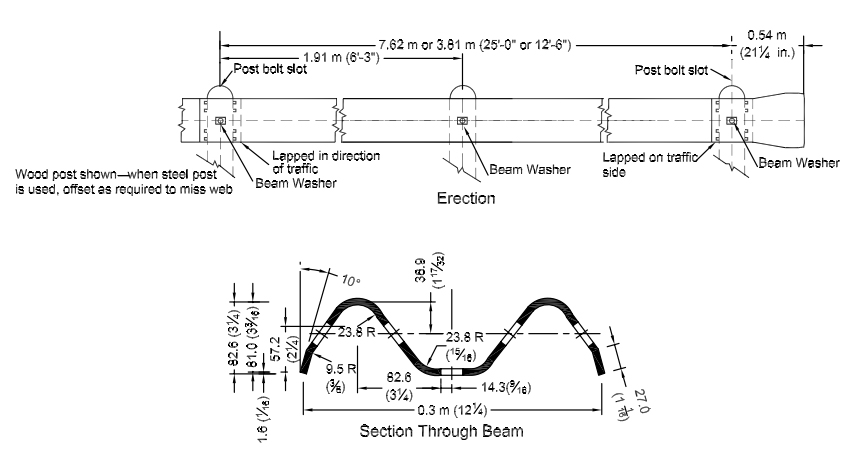
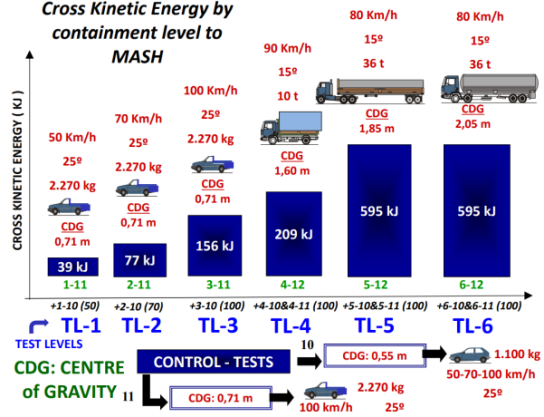
The AASHTO M180 standard, developed by the American Association of State Highway and Transportation Officials (AASHTO), is the general standard for North American corrugated guardrail beams, fittings, and material components. Complete guardrail system design and crash testing require complementary compliance with AASHTO LRFD and MASH impact specifications. It is primarily applicable to high-grade roads such as highways, municipal roads, and state roads, with strict requirements on product quality and performance, and is also an important reference standard for high-end overseas projects.
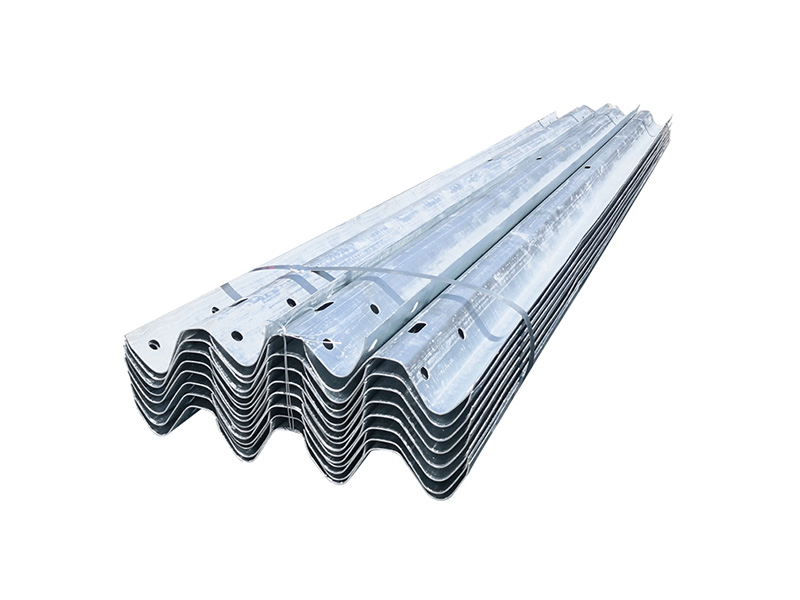
1.1 Core Requirements:Profile and Dimensions: Mainly adopts W-Beam (two-wave) and Thrie-Beam (three-wave) guardrails. W-Beam finished section width: 12¼ inches (approx. 311.15mm), wave height: 3¼ inches (approx. 82.6mm), flat sheet width before forming: 19 inches (approx. 483mm); Thrie-Beam finished section width: 20 inches (approx. 510mm), wave height: 3¼ inches (approx. 82.6mm), flat sheet width before forming: 29½ inches (approx. 749mm). The nominal thickness of both guardrail beams is classified as Class A (2.67mm) and Class B (3.43mm), with non-standard thicknesses available upon project request.
1.2 Material Requirements:Clear requirements for tensile strength and yield strength of the beam (minimum yield strength ≥ 345 MPa, minimum tensile strength ≥ 483 MPa, elongation ≥ 12%). Our factory can select corresponding strength steel (such as Q355, etc.) for production according to client project requirements.
1.3 Galvanizing Requirements: Hot-dip galvanized coating must comply with AASHTO M180. The standard defines four types of guardrail beams: Type I (zinc coating 550g/m² minimum single-spot), Type II (zinc coating 1100g/m² minimum single-spot), Type III (painted), and Type IV (corrosion-resistant steel). The specific type to be used is determined by project design; coastal or highly corrosive environments typically specify Type II. Zinc coating adhesion and uniformity must pass salt spray testing.
1.4 Crash worthiness Levels: Complies with MASH-specified levels, categorized into A, S, Am, Sm, etc. Different levels correspond to different impact energy requirements. High-speed sections often adopt S-level and Sm-level, requiring third-party impact test reports.
1.5 Project Requirements: Large U.S. infrastructure projects typically require complete technical documentation, including material certificates, galvanizing reports, impact test reports, and factory qualification certificates. Acceptance is strict, with emphasis on long-term product stability.
Our factory has production capabilities for AASHTO M180 standard products and can provide compliant guardrail beams, posts, and accessories according to client needs, along with the required technical documentation to facilitate smooth access to the U.S. market.
2. EU Standard: EN1317 (Core Basis for CE Certification)
|
|
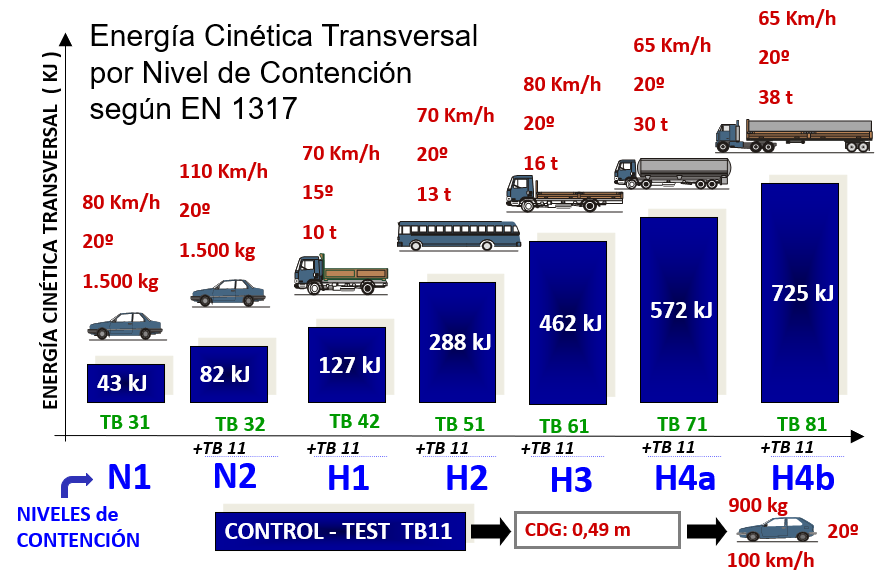
EN1317 is the common standard for road restraint systems within the EU and the European Economic Area (EEA), covering the entire process of design, production, testing, and installation. It is an essential standard for exporting to the EU market. Guardrails exported to the EU fall under the CPR (Construction Products Regulation) and require conformity assessment according to EN1317 to issue a CE declaration before they can be placed on the EU market.
2.1 Core Requirements:Crash worthiness Levels: A key highlight is the clearly defined crashworthiness levels. EN1317 classifies guardrail performance levels into four main categories: T (Temporary), N (Normal containment), H (High containment), and H4a/b (Very high containment). Each level corresponds to different vehicle types, impact speeds, and impact energy. Clients will specify the required level based on road risk assessment.
2.2 Profile and Dimensions: As a performance standard for restraint systems, EN1317 primarily governs crashworthiness levels and test methods; it does not uniformly prescribe dimensional tolerances for individual components. The most widely produced double-wave guardrail section in the European market (width 310mm, wave height 85mm, thickness 2.5-4.0mm) originates from the German RAL-RG 620 industry specification. As this specification aligns with China's GB/T 31439 standard, domestic factories commonly use this specification for EN1317 crash testing and CE certification when exporting to the EU.
2.3 Corrosion Protection Requirements: Hot-dip galvanized coating thickness ≥ 550g/m²; coastal or highly corrosive environments require ≥ 800g/m². Zinc coating plus powder/polyester coating double-layer protection is a common solution, with the coating layer thickness ≥ 60μm, typically 80μm. Must pass EU standard salt spray testing to ensure corrosion resistance.
2.4 Certification and Testing: Exporting to the EU requires providing CE certification technical documentation, including product design drawings, material certificates, and test reports (impact testing, salt spray testing, adhesion testing, etc.). Some clients may also request test reports from third-party inspection agencies.
Our factory produces EU-standard guardrails in strict accordance with EN1317, with full process control from raw material procurement, production, and processing to quality inspection and testing. We can provide complete CE certification technical documentation to meet EU market customs clearance and acceptance requirements.
3. China Standard: GB/T 31439 (Basis for Export Customization)
|
|
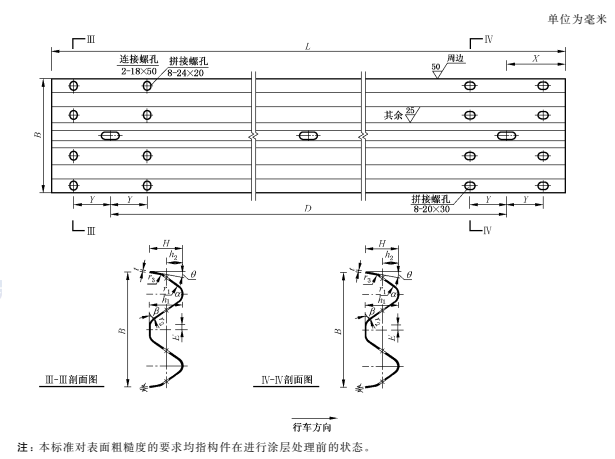
GB/T 31439 is China's national recommended standard for road traffic guardrails, divided into GB/T 31439.1-2025 (Corrugated Guardrails) and GB/T 31439.2-2025 (Posts and Accessories) (currently the latest version). It is the fundamental basis for China's guardrail production and serves as a core reference standard for modification and customization in many developing countries.
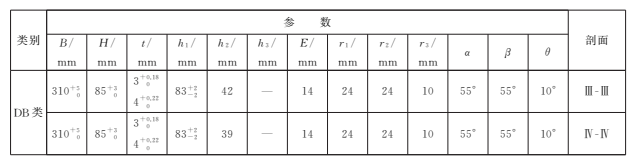
3.1 Core Requirements:Profile and Dimensions: Double-wave guardrail beam finished section width 310mm, wave height 85mm, thickness 3.0-4.0mm, flat sheet width before forming 481mm; triple-wave guardrail beam finished section width 506mm, wave height 85mm, thickness 3.0-4.0mm. Dimensions are standardized, mature, and highly adaptable.
3.2 Material and Corrosion Protection: Commonly uses Q235 and Q355 steel. Supporting anti-corrosion measures uniformly implement the current national standard GB/T 18226-2025 Specification for steel component anticorrosion of highway traffic engineering. Standard hot-dip galvanized coating thickness is 395-600g/m² (depending on steel thickness), with the ability to increase to over 1000g/m² upon client request. The process is mature and cost-effective.
3.3 Application Scenarios: Applied to domestic highways, national roads, and municipal roads. At the same time, due to its cost-effectiveness and flexible specifications, it is widely used in developing countries across Southeast Asia, the Middle East, and Africa. Many Southeast Asian and African countries lack their own local guardrail standards and directly adopt GB/T 31439 equivalently, only adjusting corrosion protection thickness and panel width to suit local transportation/construction conditions.
As a domestic source factory for guardrail production, we strictly produce according to GB/T 31439 and can also customize products based on overseas client requirements, adapting to different countries' standards. This is a core advantage for exporting to developing country markets.
Standards are the "passport" for guardrail exports and the core demonstration of a company's professionalism. Our factory has a deep presence in global markets, is familiar with the requirements of various national standards, and can provide standardized products and customized services compliant with different standards. For specific project requirements, please refer to the latest standard documents provided by the client. We also provide professional standard training for our sales team to help them successfully expand into the global guardrail market.


admin@jiantraffic.com
+86-06358219188
8613906350752
Guanxian Economic Development Zone , Liaocheng City, Shandong Province,China
 English
 Russian
 French
 Spanish
 Portuguese
 Arabic
 Malay
Malay Hindi
Hindi