In the field of highway traffic safety facilities, the structural design and component matching of guardrail systems directly determine protection performance, construction efficiency and long-term stability. Among various solutions, the assembly consisting of UPN Posts, Spoon Spacer Blocks and W Beams stands out as one of the preferred options for road projects across numerous Eurasian countries, thanks to its unique structural advantages and excellent market adaptability.
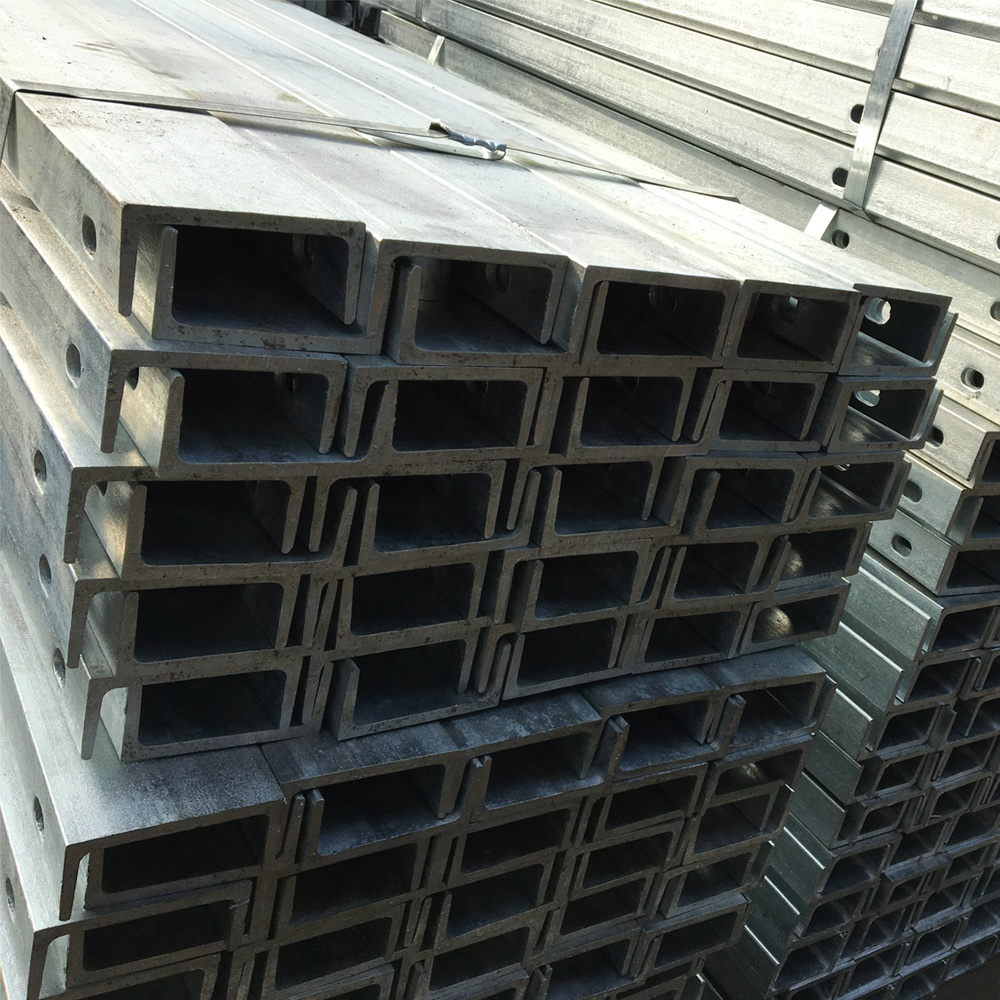
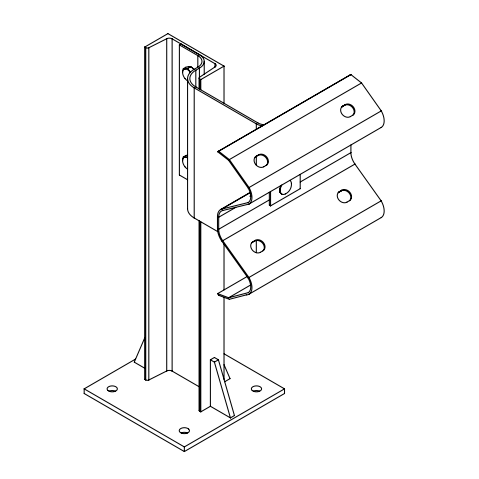
As the load-bearing core of the entire guardrail system, UPN Posts differ from conventional round posts and are fabricated from cold-formed or hot-rolled channel steel sections. In terms of material selection, UPN Posts are generally manufactured from hot-dip galvanized Q235B or Q355B steel, with a galvanized coating thickness of up to 80 microns to satisfy rigorous anti-corrosion standards. Its design strengths lie in three key aspects:
· Superior structural stability: The channel cross-section inherently delivers outstanding bending and torsional resistance. When subjected to vehicle impact loads, it absorbs energy through uniform sectional deformation and prevents instantaneous post fracture that would lead to complete protection failure.
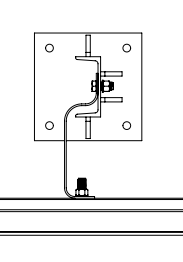
· Wide installation compatibility: The open channel notch of UPN Posts offers ample space for mounting and adjusting Spoon Spacer Blocks. Bolt fastening via prefabricated holes and on-site fine-tuning alignment are both far more convenient compared with round posts, catering particularly to construction requirements under diverse subgrade conditions.
· Outstanding anti-corrosion durability: UPN Posts can achieve full-section anti-corrosion treatment through hot-dip galvanizing, hot-dip aluminum-zinc coating and other processes. The channel profile leaves no dead corners where rainwater or debris could accumulate. Even under prolonged exposure to harsh outdoor conditions, the posts retain stable mechanical properties and cut down long-term maintenance costs.
|
|
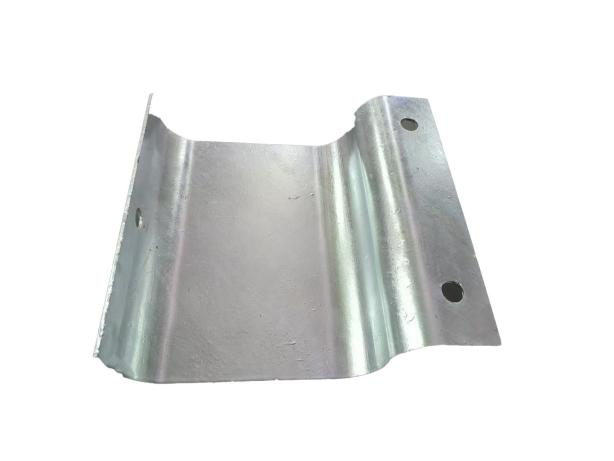
Spoon Spacer Blocks are critical connectors linking UPN Posts and W Beams, named after their spoon-like profile. They perform dual core functions: impact energy buffering and force transmission.
· Impact energy absorption: Spoon Spacer Blocks dissipate part of the initial collision energy via self-deformation, avoiding direct shock transfer to posts. Meanwhile, they distribute scattered loads evenly onto posts and subgrades, greatly upgrading the overall crashworthiness of the guardrail.
· Installation tolerance compensation: The special contoured design of Spoon Spacer Blocks allows horizontal and vertical fine-tuning of W Beams during installation. It effectively offsets deviations caused by subgrade settlement and construction errors, ensuring smooth alignment and uniform stress distribution of spliced W Beams.
· Optimized compatibility: Connection interfaces engineered exclusively for UPN channel sections enable rapid bolt alignment and fastening without extra welding or complex fittings, drastically shortening construction schedules and idealizing the rapid delivery of large-scale highway projects.
|
|
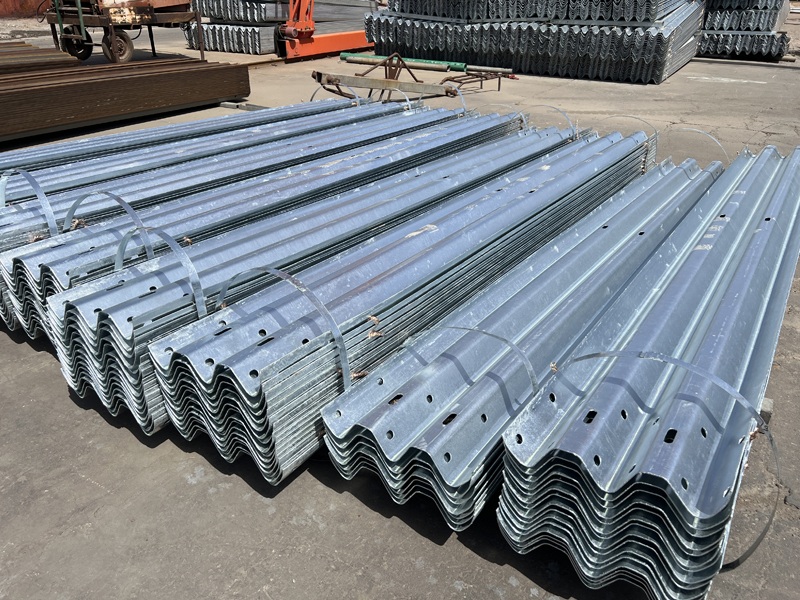
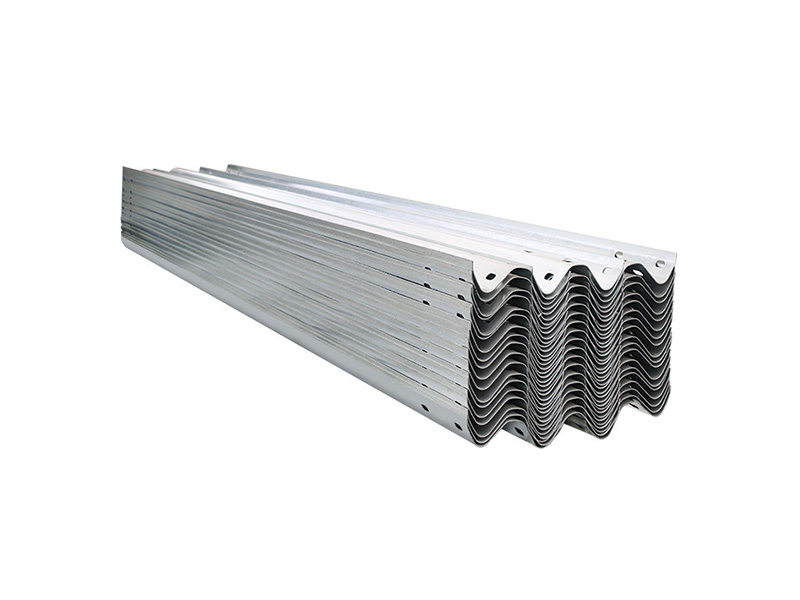
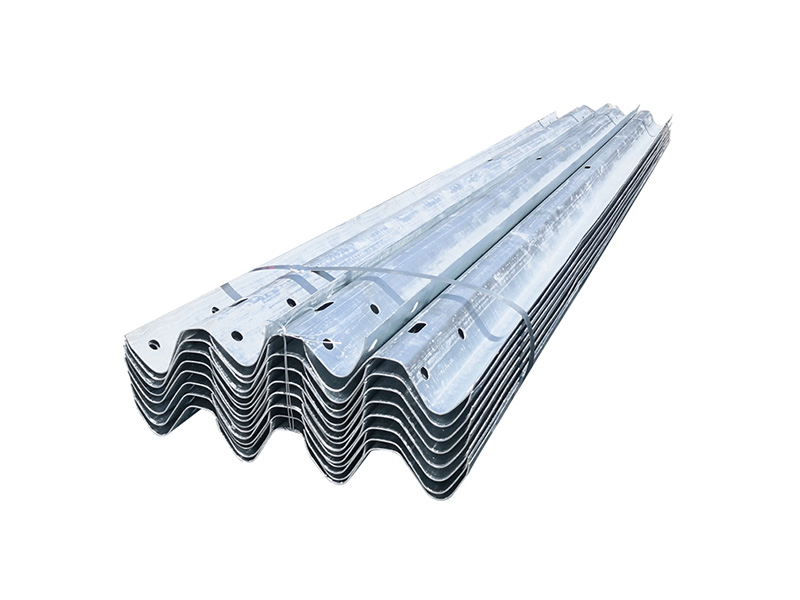
As the component directly bearing vehicle impacts, W Beams adopt a corrugated profile that absorbs collision energy through bending deformation and redirects out-of-control vehicles. When assembled with UPN Posts and Spoon Spacer Blocks, a complete protection chain is formed: load support from UPN Posts, energy buffering by Spoon Spacer Blocks, and energy absorption via W Beams. This design realizes gradual energy dissipation during collisions and eliminates the risk of W Beams being pierced directly by posts, delivering markedly enhanced overall protection performance and safety.
W Beams are generally produced from hot-dip galvanized Q235B or Q355B steel. They shall feature a minimum yield strength of 345 MPa (50,000 psi), a minimum tensile strength of 483 MPa (70,000 psi), and a minimum elongation of 12% over a 50 mm (2 in.) gauge length. Four types and two classes of guardrail beams are specified: Type I refers to zinc-coated beams with a minimum single-spot coating mass of 550 g/m²; Type II denotes zinc-coated beams with a minimum single-spot coating mass of 1100 g/m²; Type III is painted beams; Type IV is beams made of corrosion-resistant steel. Class A beams have a nominal base metal thickness of 2.67 mm (0.105 in.), while Class B beams have a nominal base metal thickness of 3.43 mm (0.135 in.)
|
|
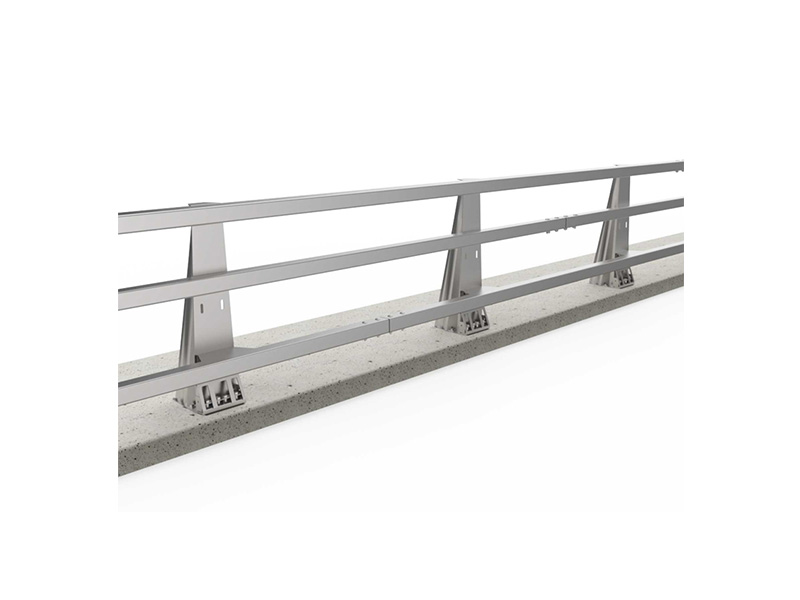
The structural design and performance characteristics of this guardrail assembly align perfectly with road engineering demands in Russia and the five Central Asian republics (Kazakhstan, Uzbekistan, Kyrgyzstan, Tajikistan, Turkmenistan), primarily reflected in the following strengths:
· Adaptability to complex subgrades: Regions including Russia and Central Asia feature complicated geological conditions such as permafrost, deserts and gobi terrain. The high stability of UPN Posts and adjustable functionality of Spoon Spacer Blocks effectively counteract structural deformation triggered by subgrade settlement and frost heave, guaranteeing long-term reliable guardrail operation.
· Stable performance under low-temperature environments: The steel grades and anti-corrosion treatments adopted for this assembly withstand frigid low-temperature climates at high latitudes, preventing material embrittlement and coating delamination to meet local durability requirements for road infrastructure.
· Compatibility with construction efficiency demands: Highway construction projects across Eurasian countries often cover vast areas with tight construction schedules. The modular design and fast-installation features of this system lower on-site construction difficulty, reduce reliance on heavy construction machinery and skilled labor, and accelerate project delivery.
· Cost-effective production and maintenance: UPN Posts and Spoon Spacer Blocks utilize mature, cost-controllable manufacturing processes. Only locally damaged components require replacement during later maintenance instead of full system renewal, resulting in far lower comprehensive lifecycle costs than guardrail systems with complex alternative structures.
The products are designed in reference to EN 1317, the European standard for road restraint systems. Customized compliance support is available to match individual project specifications, laying a solid foundation for business expansion into more global markets.
The UPN Post + Spoon Spacer Block + W Beam assembly is far more than a simple combination of separate components; it represents a systematic solution tailored to complex road conditions, harsh environmental exposure and rigorous engineering requirements throughout the Eurasian region. With stable structural performance, highly adaptable construction efficiency and complete standard certification, this system serves as a dependable option for road safety barrier projects in Russia, the five Central Asian republics and adjacent territories, delivering robust safeguards for local highway traffic safety.


admin@jiantraffic.com
+86-06358219188
8613906350752
Guanxian Economic Development Zone , Liaocheng City, Shandong Province,China
 English
 Russian
 French
 Spanish
 Portuguese
 Arabic
 Malay
Malay Hindi
Hindi