In road safety engineering, the combination of U Post, U Spacer and W Beam constitutes a classic and highly adaptable modular protection solution. Featuring mature structural design, reliable mechanical performance and convenient installation characteristics, it has become one of the mainstream choices for highway protection projects across numerous regions worldwide.
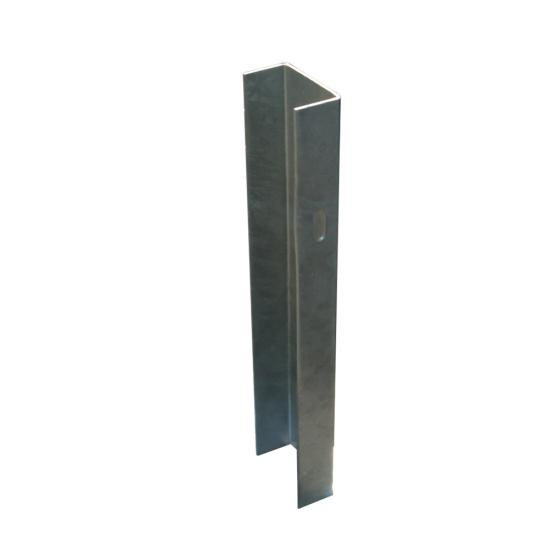
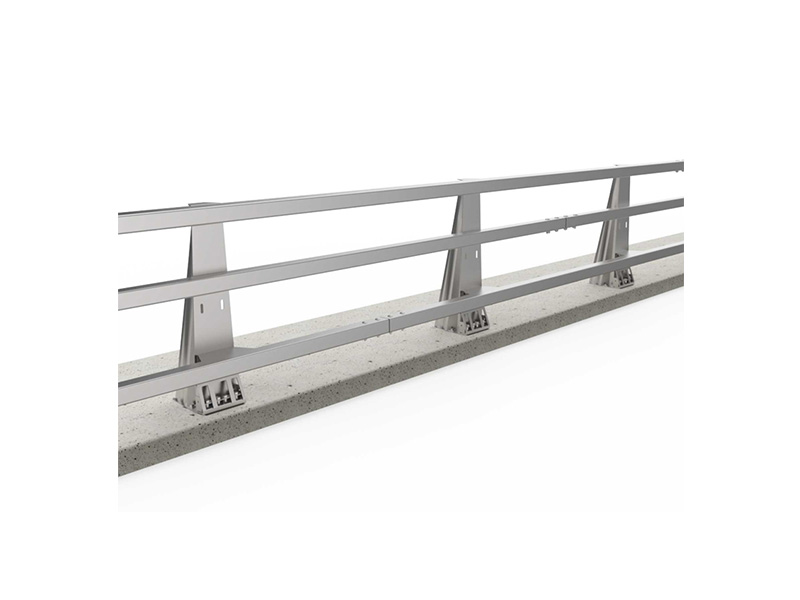
The U Post serves as the core supporting structure of the entire guardrail system. Its U-shaped cross-section delivers excellent flexural rigidity and structural stability, providing uniform and dependable support for the W Beam. Upon vehicle impact, the U Post effectively bears and disperses impact force, preventing local bending and instability of the post. While reducing impact loads transferred to vehicles and passengers, it maintains the guiding function for out-of-control vehicles and ensures protection redundancy of the overall structure.
In terms of material selection, U Posts are generally manufactured from hot-dip galvanized steel grades Q235B or Q355B, with a galvanized coating thickness up to 80 microns to meet stringent anti-corrosion requirements. Its cross-section design balances lightweight construction and structural strength, suitable for installation under various geological conditions. It is compatible with driving-in, embedded and flange-mounted installation methods for efficient deployment.
|
|
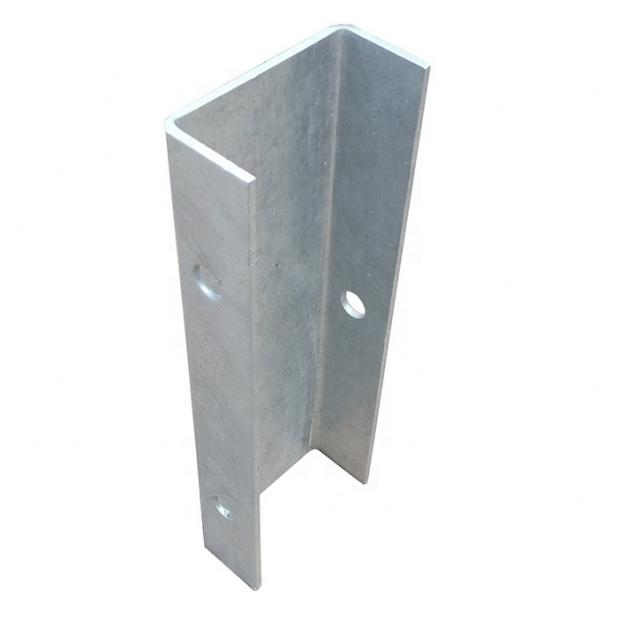
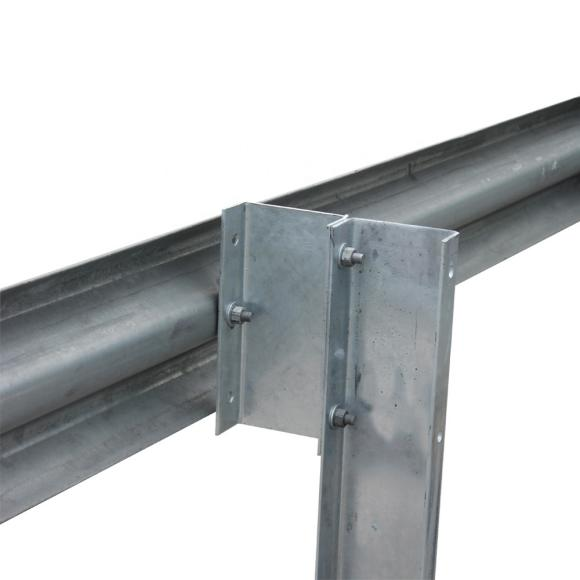
As a critical transition component between the U Post and W Beam, the U Spacer acts as a key energy-absorbing part of the whole system. On one hand, it precisely matches the installation spacing between U Posts and W Beams, ensuring smooth alignment and even stress distribution of installed W Beams and avoiding local stress concentration. On the other hand, under impact loading, the U Spacer undergoes elastic deformation via self-compression to efficiently absorb collision energy, further mitigating impact force transmitted to the posts. This safely guides motor vehicles back to normal travel directions, perfectly coordinating the energy-absorbing effect of W Beams with the rigid support of U Posts. Meanwhile, it reduces component wear and assembly tolerance impacts, significantly enhancing the stability and durability of the whole system.
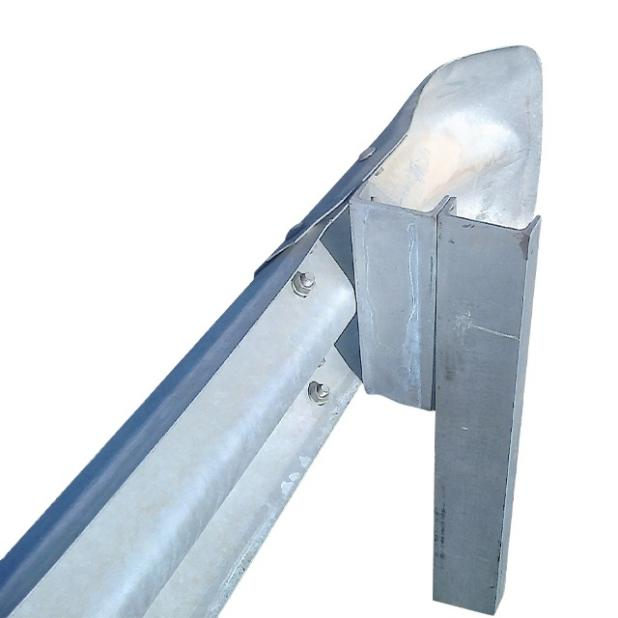
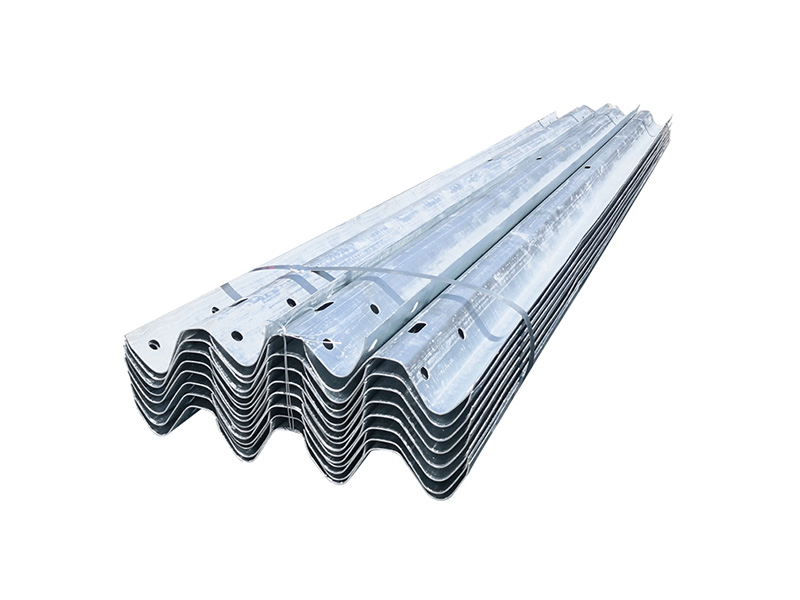
As the protective component directly subjected to vehicle impact, the W Beam features a unique corrugated cross-section. During collisions, it efficiently absorbs kinetic energy through elastic deformation and plastic elongation, and guides out-of-control vehicles back to normal travel paths with gentle curvature, lowering accident damage risks. Combined with U Posts and U Spacers, it forms a complete protection closed-loop of “flexible energy absorption + rigid support”. It not only retains the proven protective performance of W Beams but also improves both installation efficiency and structural stability through the adaptive design of U Spacers.
The W Beam are generally manufactured from hot-dip galvanized steel grades Q235B or Q355B.The W Beam shall have a minimum yield point of 345 MPa (50000 psi), a minimum tensile strength of 483 MPa (70000 psi), and a minimum elongation of 12 percent in 50 mm (2 in.); four types and two classes of guardrail are specified, with Type I being zinc‑coated with a minimum single‑spot coating weight of 550 g/m², Type II zinc‑coated with a minimum single‑spot coating weight of 1100 g/m², Type III painted beams, Type IV beams made of corrosion‑resistant steel, Class A having a base metal nominal thickness of 2.67 mm (0.105 in.), and Class B having a base metal nominal thickness of 3.43 mm (0.135 in.).
Adopting a modular design, the full assembly forms a complete semi-rigid crash barrier system. With high component interchangeability, it enables streamlined and efficient on-site assembly as well as convenient later-stage inspection and replacement. Compatible with multiple protection levels, it satisfies protection standards for diverse road scenarios.
|
|
Key Target Regions and Countries
Boasting broad environmental adaptability and stable engineering performance, this U Post integrated protection system has been widely applied in highway construction projects across the globe, with mature application cases in the following regions:
1. Middle East: Widely adopted in expressways, inter-city highways and urban arterial roads of Saudi Arabia, the United Arab Emirates, Qatar, Oman, Kuwait, Iraq and other countries. With outstanding wind-load resistance and anti-corrosion performance, it adapts to the Middle East’s special climatic conditions of high temperature, heavy salt spray and intense sandstorms, while complying with local design specifications for highway protection engineering.
2. Africa: Applied in new highway construction and old-road upgrading projects in Nigeria, Kenya, Ethiopia, Algeria and other nations. It meets local diverse topographical, geological and construction requirements by virtue of easy installation and low maintenance costs.
3. Southeast Asia and Central Asia: Extensively used in national/provincial trunk roads and mountain highways of Vietnam, Indonesia, Kazakhstan, Uzbekistan and other countries, satisfying protection demands for highways of different grades.
International Standard Compliance and Authoritative Certifications
The complete protection system strictly aligns with mainstream global road traffic safety codes and fully meets design, testing and acceptance standards of corresponding countries and regions. Core compliance and certifications include:
1. International Highway Guardrail Standards: Compliant with leading global guardrail design and performance standards such as AASHTO M180 and EN 1317. All mechanical performance and crash protection indicators have passed authoritative testing and verification to meet technical requirements for various protection levels.
2. Material and Quality System Certifications: Certified under ISO 9001 Quality Management System and ISO 14001 Environmental Management System. Complete material test reports and hot-dip galvanized anti-corrosion coating inspection reports are provided to guarantee material quality and durability of components.


admin@jiantraffic.com
+86-06358219188
8613906350752
Guanxian Economic Development Zone , Liaocheng City, Shandong Province,China
 English
 Russian
 French
 Spanish
 Portuguese
 Arabic
 Malay
Malay Hindi
Hindi