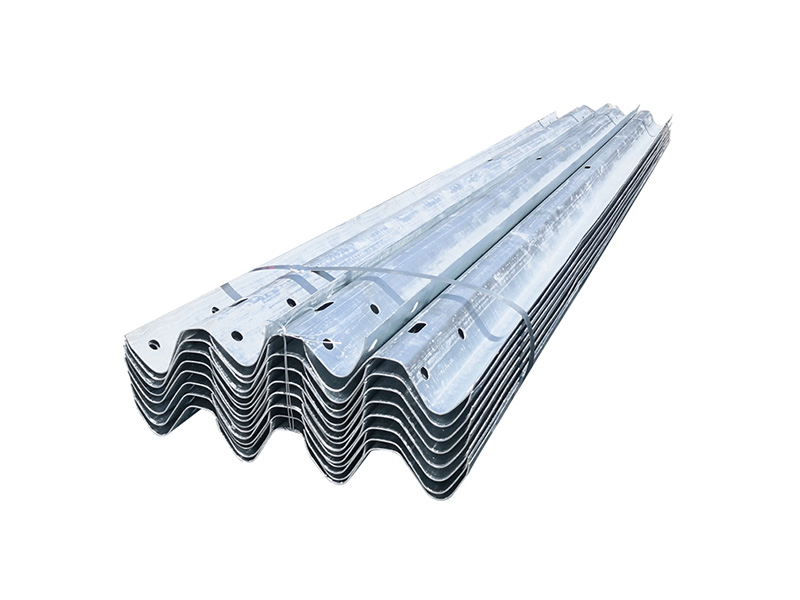
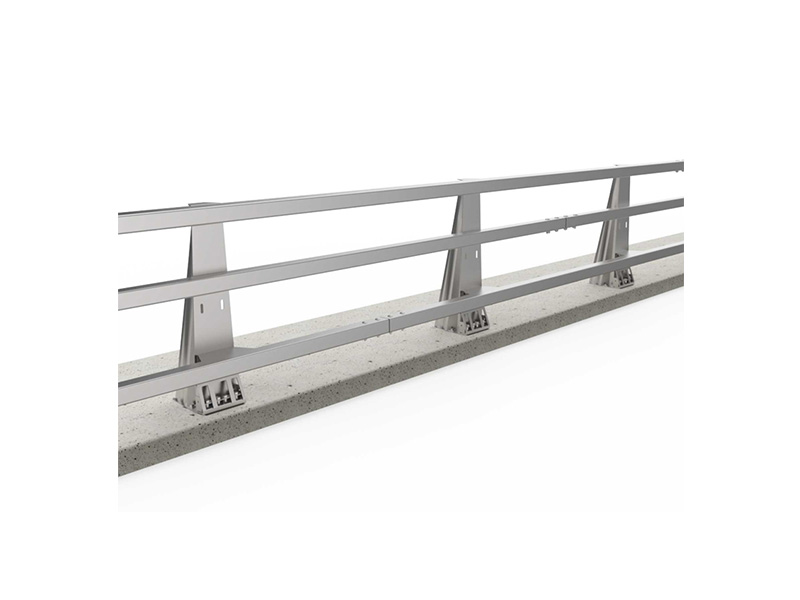
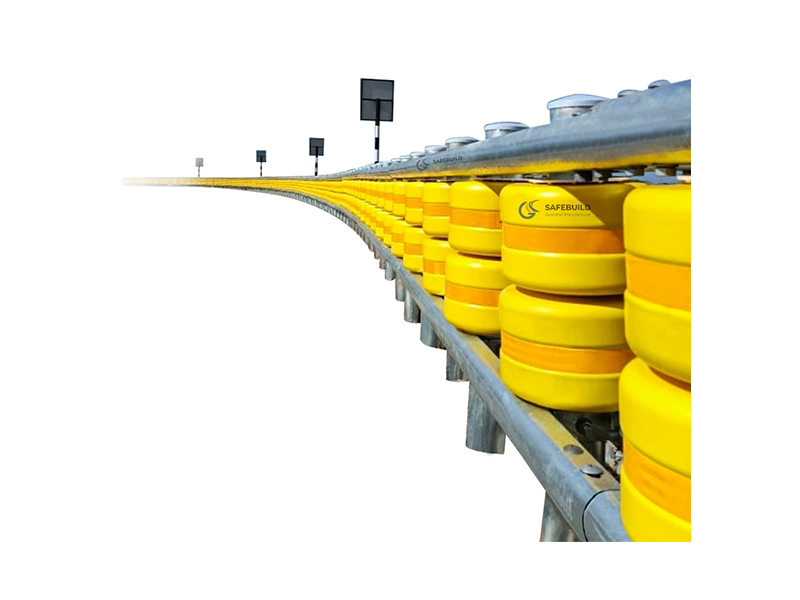
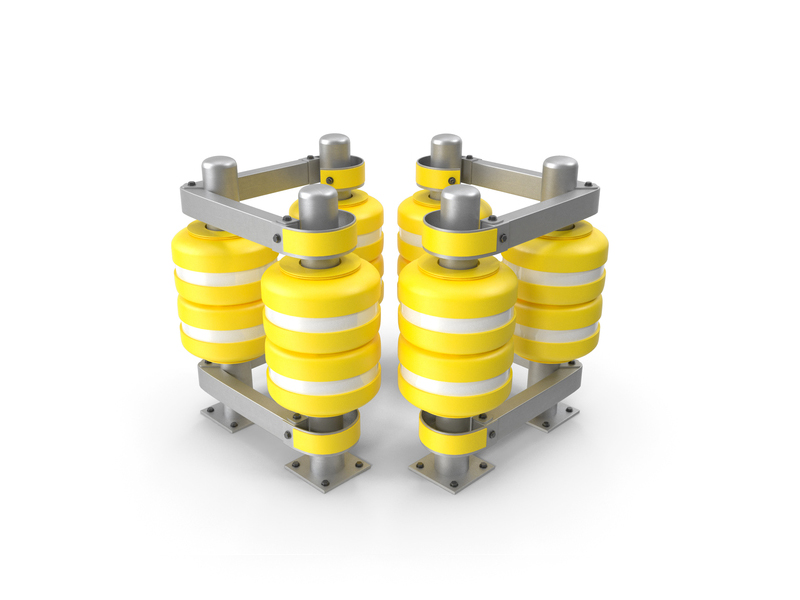
In the global road safety standard system, the European Union's EN 1317 standard is one of the most authoritative technical specifications in the field of Road Restraint Systems (RRS). It is even a mandatory requirement for products to enter the EU market and obtain CE certification, building a solid technical barrier for road traffic safety. EN 1317 is not a single standard but a complete normative system composed of multiple parts. Each part undertakes its own duties, formulating detailed requirements for different dimensions and product types of road restraint systems, thus forming a technical framework covering the entire process of design, testing, certification and production.
Different from other road safety standards, EN 1317 does not directly stipulate which protective products must be used in certain scenarios. Instead, it defines clear performance boundaries for products through performance grading, allowing engineering designers and purchasers to independently select suitable products according to the actual road conditions (such as traffic flow, vehicle composition and road environment). Its performance grading centers on three key indicators, which are also the core dimensions that all road restraint system products need to verify through tests: Containment Level, Working Width and Impact Severity. Together, these three form the evaluation core of product performance.
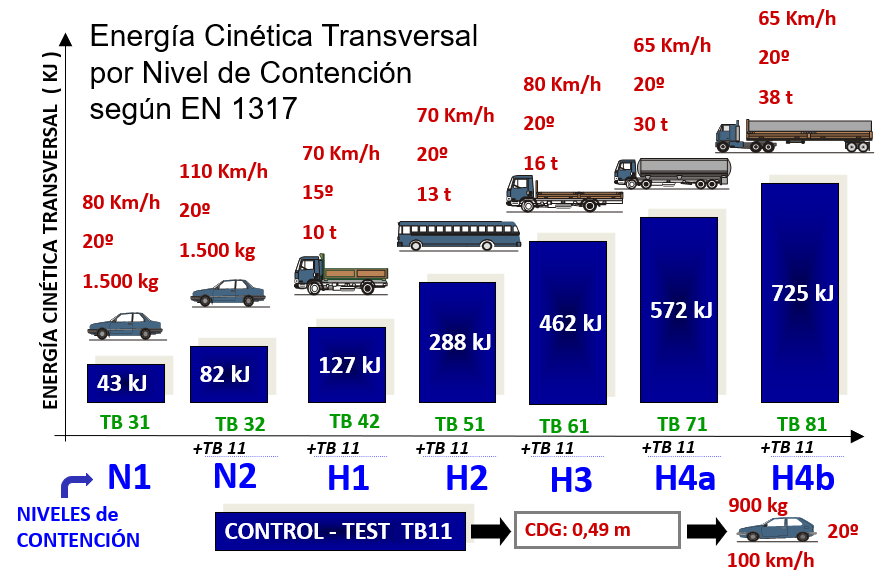
Containment Level is the most core grading basis of EN 1317, directly reflecting a product's ability to block out-of-control vehicles. It is divided into four categories from low to high protection capacity: Low Containment, Normal Containment, Higher Containment and Very High Containment, corresponding to series grades such as T, N, H and L. Different grades set strict impact test requirements for test vehicles of different weights and speeds. Ranging from the Low Containment Level for 1300kg light-duty vehicles traveling at 80km/h to the Very High Containment Level H4b that can withstand the impact of 38000kg heavy-duty vehicles at 65km/h, each grade clearly specifies the total mass, impact speed and impact angle of the test vehicle, and all tests must be completed by authoritative certification bodies recognized by the EU. For example, the Higher Containment Level H3 can withstand the impact of a 16000kg heavy-duty vehicle at 80km/h and a 20° angle, and at the same time, it must pass the impact test of a 900kg light-duty vehicle at 100km/h and a 20° angle, fully verifying the product's protective capacity for different vehicle types.
Containment Level | Containment Levels | Acceptance Test | |||||||
Low angle containment | T1 | TB21 | |||||||
T2 | TB22 | ||||||||
T3 | TB41,TB21 | ||||||||
Normal containment | N1 | TB31 | |||||||
N2 | TB32,TB11 | ||||||||
Higher containment | H1 | TB42,TB11 | |||||||
L1 | TB42,TB32,TB11 | ||||||||
H2 | TB51,TB11 | ||||||||
L2 | TB51,TB32,TB11 | ||||||||
H3 | TB61,TB11 | ||||||||
L3 | TB61,TB32,TB11 | ||||||||
Very high containment | H4a | TB71,TB11 | |||||||
H4b | TB81,TB11 | ||||||||
L4a | TB71,TB32,TB11 | ||||||||
L4b | TB81,TB32,TB11 | ||||||||
N0 | Test | Impact Speed (km/h) | Impact Angle (degrees) | Total Vehicle Mass (kg) | Type of Vehicle | |||||
1 | TB11 | 100 | 20 | 900 | Automobile | |||||
2 | TB21 | 80 | 8 | 1300 | Automobile | |||||
3 | TB22 | 80 | 15 | 1300 | Automobile | |||||
4 | TB31 | 80 | 20 | 1500 | Automobile | |||||
5 | TB32 | 110 | 20 | 1500 | Automobile | |||||
6 | TB41 | 70 | 8 | 10000 | Heavy Vehicle | |||||
7 | TB42 | 70 | 15 | 10000 | Heavy Vehicle | |||||
8 | TB51 | 70 | 20 | 13000 | Bus | |||||
9 | TB61 | 80 | 20 | 16000 | Heavy Vehicle | |||||
10 | TB71 | 65 | 20 | 30000 | Heavy Vehicle | |||||
11 | TB81 | 65 | 20 | 38000 | Trailer Heavy Vehicle |
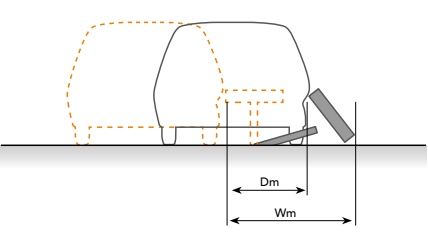
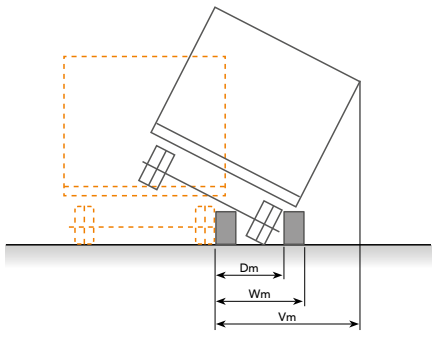
Working Width focuses on the deformation range of a product after being impacted, referring to the distance between the front of the undeformed barrier and the farthest end of the barrier deformation after impact. This indicator is directly related to the spatial design of road engineering. For example, in scenarios with limited space such as cliffs, bridges and median strips, products with a smaller Working Width need to be selected to prevent the barrier from encroaching on adjacent lanes or causing secondary hazards after deformation. By clarifying this indicator, EN 1317 makes the adaptability of products to road scenarios more operable.
|
| |||||||
Classes of working width levels | Levels of working width(m) | Classes of vehicle intrusion levels | Levels of vehicle intrusion(m) | |||||
W1 | W≤0.6 | VI1 | VIN≤0.6 | |||||
W2 | W≤0.8 | VI2 | VIN≤0.8 | |||||
W3 | W≤1.0 | VI3 | VIN≤1.0 | |||||
W4 | W≤1.3 | VI4 | VIN≤1.3 | |||||
W5 | W≤1.7 | VI5 | VIN≤1.7 | |||||
W6 | W≤2.1 | VI6 | VIN≤2.1 | |||||
W7 | W≤2.5 | VI7 | VIN≤2.5 | |||||
W8 | W≤3.5 | VI8 | VIN≤3.5 | |||||
VI9 | VIN≤3.5 | |||||||
Impact Severity is an evaluation standard formulated from the perspective of occupant protection, which assesses the probability of injury risk to occupants in the vehicle when the vehicle collides with protective products through biomechanical indicators. This indicator requires that products can not only "block" vehicles, but also buffer impacts through reasonable structural design to reduce the possibility of occupant injury, reflecting the people-oriented safety design concept of EN 1317.
Impact severity level | Index values | ||
A | ASI≤1.0 | THIV≤33km/h | |
B | ASI≤1.4 | ||
C | ASI≤1.9 | ||
ASI:Acceleration Severity Inder THIV:Theoretical Head Impact Velocity | |||
To ensure the implementation of the standard, EN 1317 has formulated a strict conformity assessment and certification system, among which CE certification is the core threshold for products to enter the EU market, and EN 1317-5 is the core basis for CE certification. To obtain CE certification in compliance with EN 1317, products must pass the testing and audit of Notified Bodies (NB) recognized by the European Commission, complete full-scale real-vehicle impact tests, and the test results must fully meet the three core indicator requirements of the corresponding performance grade. At the same time, manufacturers must provide detailed product installation manuals specifying the specific requirements for installation, maintenance and inspection. Only when products are used in accordance with the manual requirements can their certified performance be valid. In January 2025, the new EU regulation (EU) 2024/3110 officially came into force, replacing the original CPR 305/2011 regulation. It has further improved the product definition, manufacturer responsibilities and market supervision requirements for road restraint systems, and also introduced a product digital passport system, making the certification system of EN 1317 more in line with the development trend of digitalization and putting forward higher requirements for product quality traceability.
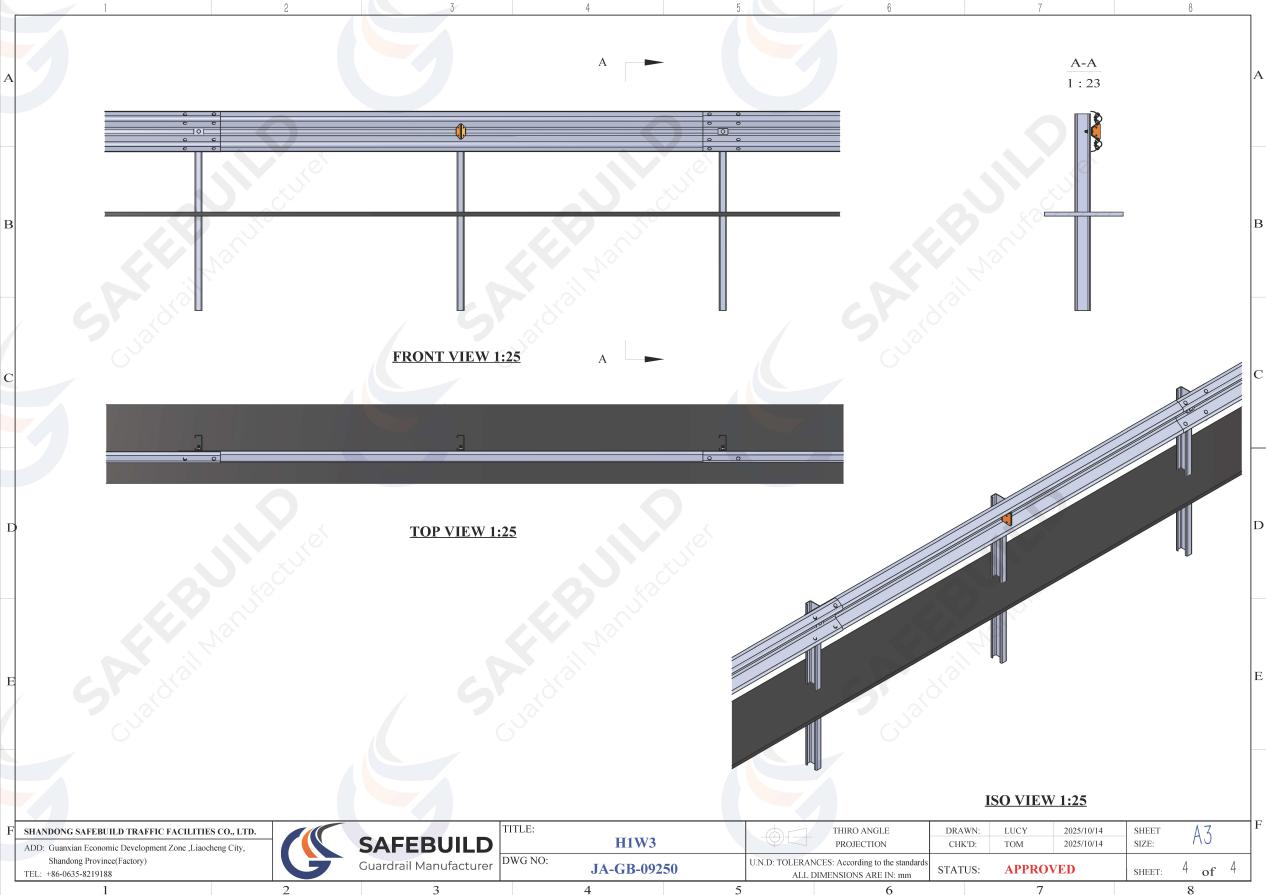
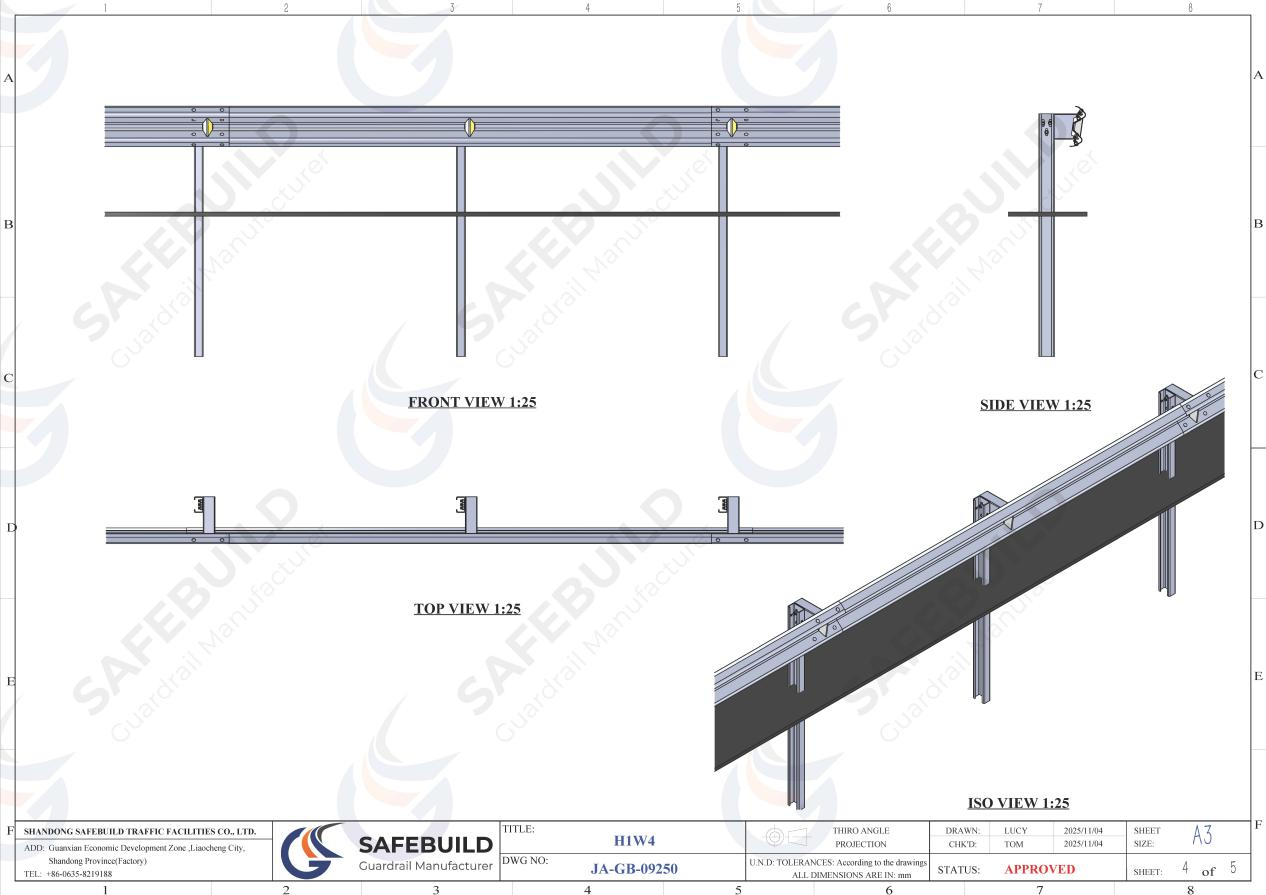
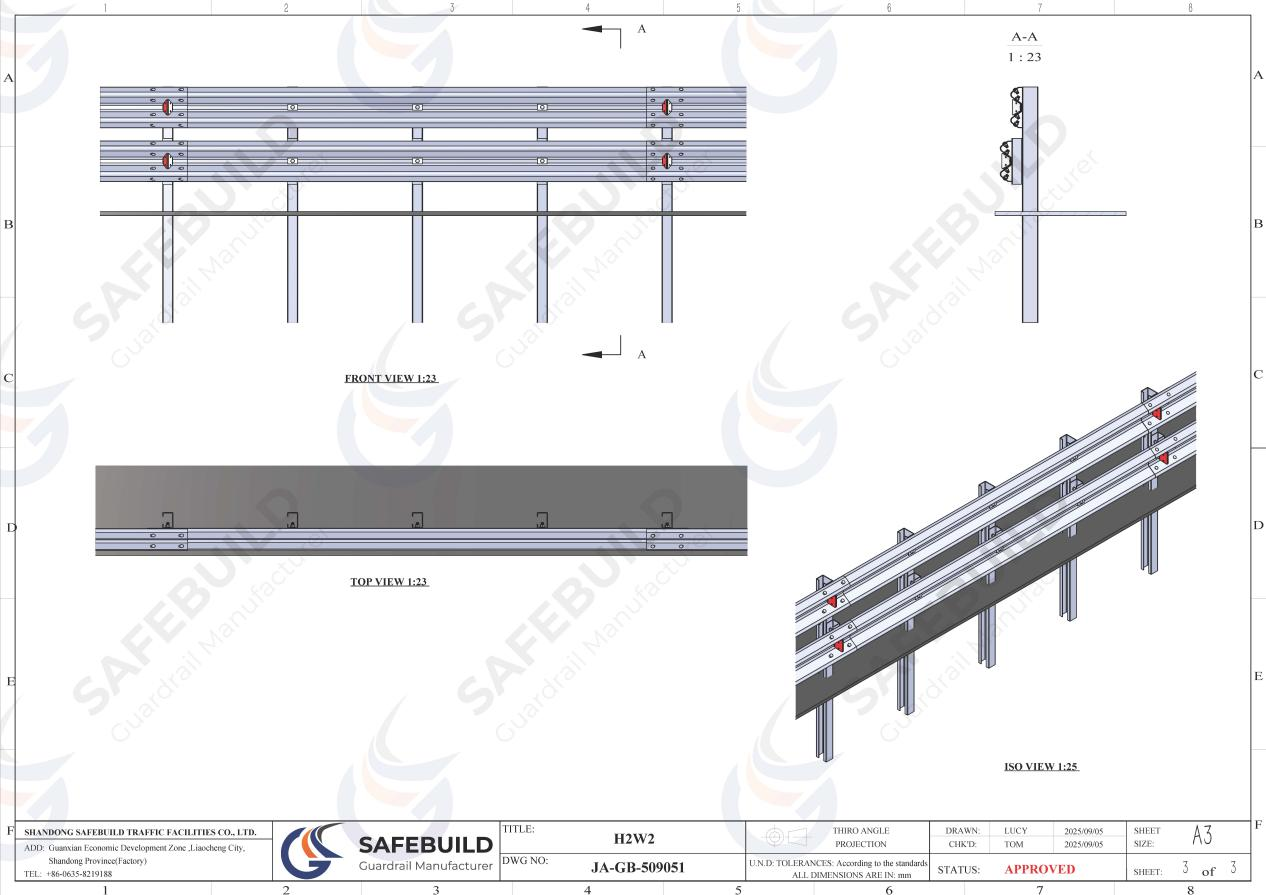
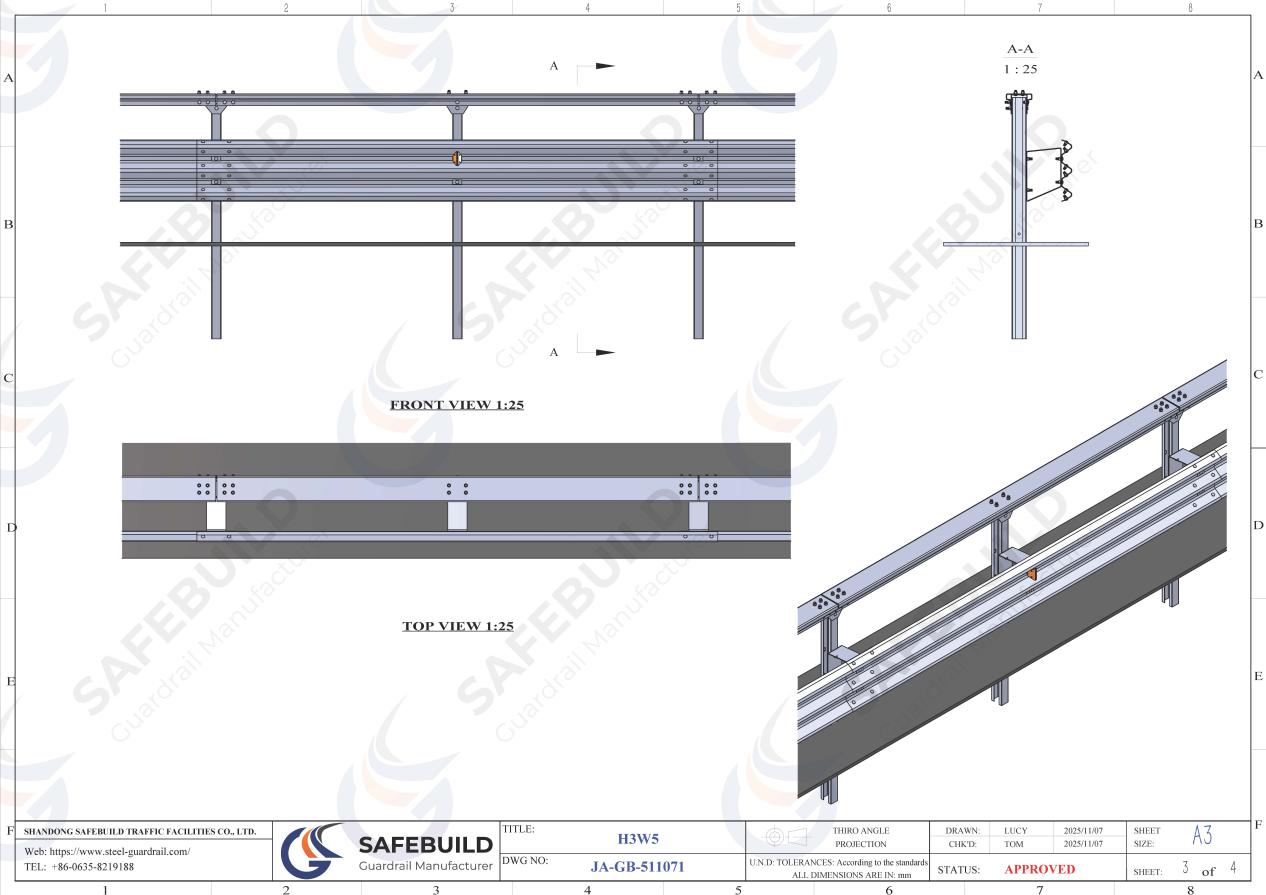
Safebulid provides product drawings for the following grades:
Type 1-H1
| ||||||||||
Test | Facility | Type | Barrier length (m) | Mass (kg) | Speed (km/h) | ASI Max 1.4 | THIV max 33 (km/h) | D (m) | Vi (m) | W (m) |
TB42 | Aisico | Laterale 15° | 68 | 10000 | 70 | - | - | 0.8 | 1.3=VI4 | 1.0=W3 |
TB11 | Aisico | Laterale 20° | 68 | 900 | 100 | 0.8=A | 27 | 0.7 | - | 0.8=W2 |
Type 2-H1
| ||||||||||
Test | Facility | Type | Barrier length m | Mass (kg) | Speed (km/h) | ASI Max 1.4 | THIV max 33 (km/h) | D (m) | Vi (m) | W (m) |
TB42 | Aisico | Laterale 20° | 72 | 10000 | 70 | - | - | 1.2 | 1.9=VI6 | 1.3=W4 |
TB11 | Aisico | Laterale 20° | 72 | 900 | 100 | 1.0=A | 33 | 0.5 | - | 0.6=W1 |
Type 3-H2
| ||||||||||
Test | Facility | Type | Barrier length (m) | Mass (kg) | Speed (km/h) | ASI Max 1.4 | THIV max 33 (km/h) | D (m) | Vi (m) | W (m) |
TB51 | Aisico | Laterale 20° | 80 | 13000 | 70 | - | - | 0.7 | 0.8=VI2 | 0.8=W2 |
TB11 | Aisico | Laterale 20° | 80 | 900 | 100 | 1.2=B | 33 | 0.4 | - | 0.4=W1 |
Type 4-H3
| ||||||||||
Test | Facility | Type | Barrier length (m) | Mass (kg) | Speed (km/h) | ASI Max 1.4 | THIV max 33 (km/h) | D (m) | Vi (m) | W (m) |
TB61 | Aisico | Laterale 20° | 85.5 | 16000 | 80 | - | - | 1.2 | 1.7=VI5 | 1.6=W5 |
TB11 | Aisico | Laterale 20° | 85.5 | 900 | 100 | 1.00=A | 22 | 0.4 | - | 0.6=W1 |
Type 5-H4
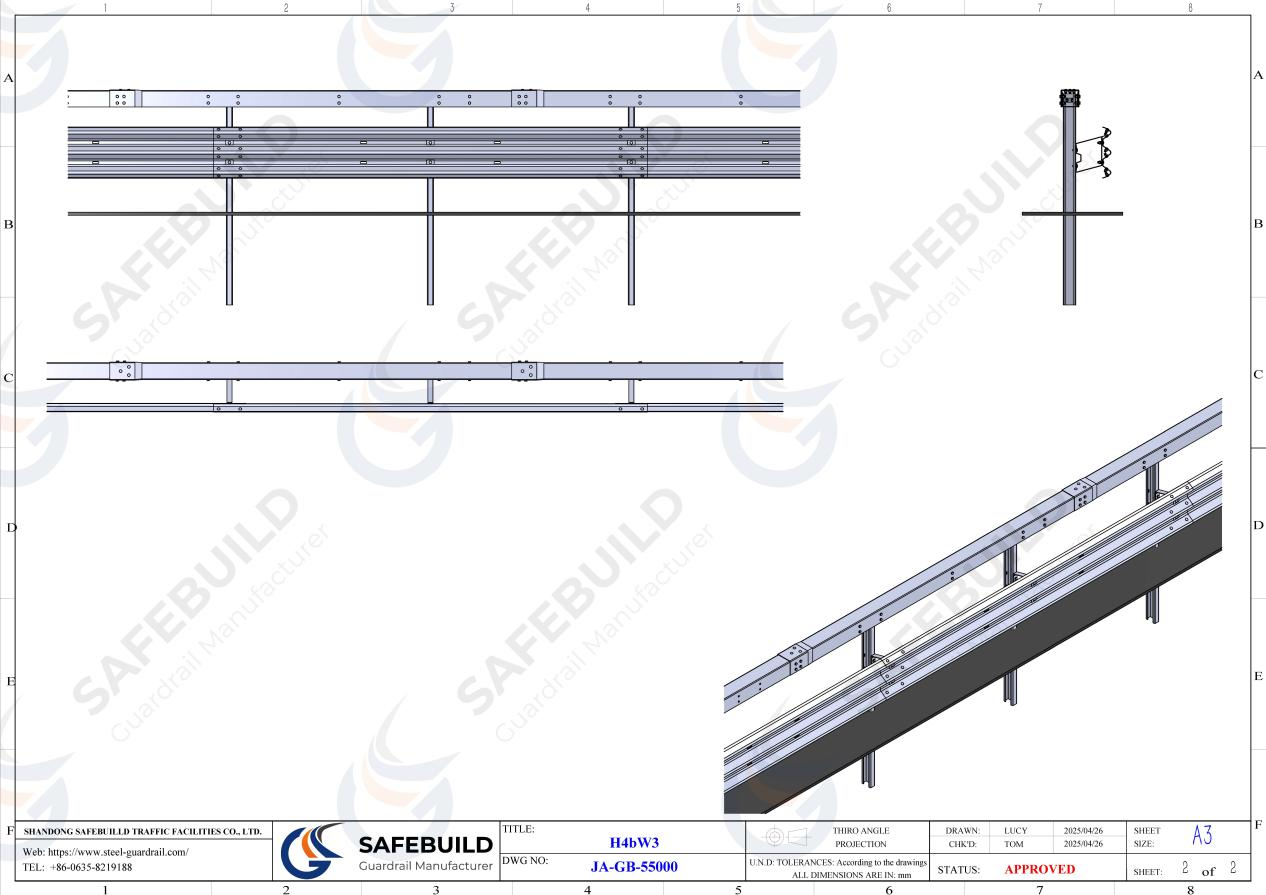 | ||||||||||
Test | Facility | Type | Barrier length m | Mass (kg) | Speed (km/h) | ASI Max 1.4 | THIV max 33 (km/h) | D (m) | Vi (m) | W (m) |
TB81 | CSI | Laterale 20° | 81 | 38000 | 65 | - | - | 0.7 | 2.0=VI6 | 1.0=W3 |
TB81 | CSI | - | - | - | - | - | - | - | - | |
TB11 | CSI | Laterale 20° | 81 | 900 | 100 | 1.1=B | 32 | 0.3 | - | 0.6=W1 |
TB81 | - | Laterale 20° | 81 | 38000 | 65 | - | - | 0.5 | 1.6=VI5 | 1.0=W3 |
TB11 | - | Laterale 20° | 81 | 900 | 100 | 1.2=B | - | 0.3 | - | 0.5=W1 |
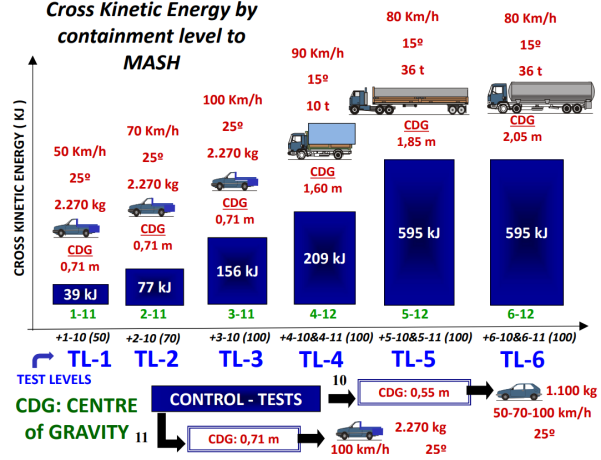
In the global road safety standard system, EN 1317 and the American AASHTO MASH standard are known as the two core criteria. Both focus on the safety performance of road protection products, but there are obvious differences in test indicators and design concepts. For example, in terms of impact angle, EN 1317 adopts a 20° impact angle for passenger car tests of normal and higher containment levels, while the MASH standard uses a 25° impact angle for passenger car and pickup truck tests; in terms of vehicle type coverage, the very high containment level of EN 1317 can cope with 38000kg ultra-heavy vehicles with a wider protection range, while the MASH standard focuses more on the protection of 10000kg single-unit trucks common on North American roads. The differences between the two standards stem from the different road traffic characteristics in Europe and America, but both have become important references for the design of global road safety products. Many international brands' products will meet the requirements of both standards at the same time to adapt to the market demands of different countries and regions.
|
|
Today, EN 1317 is not only a technical specification within the EU, but its core design concepts and testing methods have been learned from by many countries and regions around the world, becoming a universal technical language for road safety barrier systems. For the road engineering field, the value of EN 1317 lies in providing a scientific and quantitative basis for product selection, making road protection design no longer rely on experience but on strict performance test data; for manufacturers, passing EN 1317 certification means that the product meets the high-end safety standards of the EU and is a "passport" to open the international market; for ordinary road users, protective products complying with the EN 1317 standard mean more reliable safety protection and reduced accident casualties in the event of traffic accidents.


admin@jiantraffic.com
+86-06358219188
8613906350752
Guanxian Economic Development Zone , Liaocheng City, Shandong Province,China
 English
 Russian
 French
 Spanish
 Portuguese
 Arabic
 Malay
Malay Hindi
Hindi